Find a CareRight job.

Browse All

Home Care vs. Care Homes: Making the Right Choice for Your Loved One
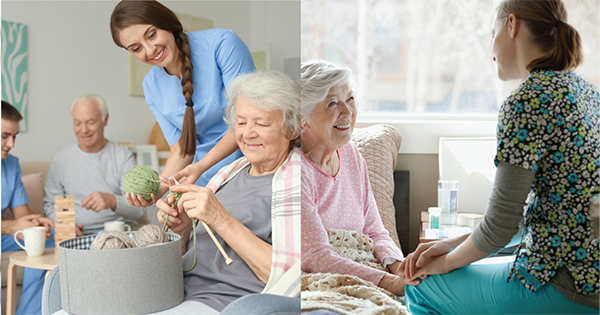

Two images split down the middle, on one side a care home with two residents and two carers and on the other a carer with a service user sitting on their own bed in their own house
Author

2023 16th November · 5 min read

Share this article

When it comes to providing care for yourself or a loved one, the decision is of utmost importance. You want the best possible care that suits your unique needs and circumstances. In this article, we'll explore the two primary options: home care and care homes. We'll delve into the intricacies of each, helping you make an informed choice that ensures the highest quality of care for your loved one.


Understanding Home Care


What is Home Care?

Home care is a personalised care service provided within the comfort of your own home. It can take different forms, such as live-in care, visiting care, or specialised care catering to specific needs. Whether it's assistance with daily tasks like dressing and eating or round-the-clock support, home care is designed to fit your requirements seamlessly.


What is the Experience Like?

Opting for home care means maintaining your normal daily life without leaving your familiar surroundings. It entails having a caregiver by your side, ensuring that your needs are met promptly, whether it's day or night. Home care offers companionship and assistance, creating a warm and supportive environment for you or your loved one.


Exploring Care Homes


What are Care Homes?

Care homes are establishments that provide both accommodation and personal care for individuals in need. These homes can be categorised into two main types: residential care homes and nursing homes. Some facilities offer a combination of both, along with additional activities and day trips. It's crucial to thoroughly research your options when considering care homes.


Distinguishing Residential and Nursing Homes

A residential care home primarily offers accommodation and personal care, encompassing tasks like bathing, dressing, medication management, and toileting. On the other hand, nursing homes provide the same level of care but always have at least one qualified nurse on staff. These facilities are specially designed for individuals with complex medical conditions or severe mental or learning disabilities.


Life in a Care Home

Living in a care home involves having your private room, communal areas for socialising and engaging in activities, and scheduled mealtimes. The accessibility of outdoor spaces may vary depending on the facility and the level of care required. Some residents may need supervision to access outdoor areas, ensuring their safety and well-being.


Home Care vs. Care Homes: Weighing the Benefits


Now that we have a clear understanding of both home care and care homes, let's examine the advantages of home care, which often outshine those of care homes.


The Benefits of Home Care

  • Personalised, One-to-One Care: Home care services, like those provided by Careright, offer one-to-one, person-centred care. This means your loved one receives undivided attention and tailored support in the comfort of their own home.
  • Daily Activities in Familiar Surroundings: Home care allows individuals to continue enjoying their favourite activities, whether it's savouring a beloved meal, watching TV shows, or taking leisurely walks in local parks. It promotes a sense of normalcy.
  • Real-Time Feedback: Home care agencies often use mobile apps that enable family members to view daily notes after each visit. This provides peace of mind and keeps you well-informed about your loved one's well-being.
  • Holistic Care: Home carers play a crucial role in ensuring a holistic approach to care. They can assist with medication collection and administration, help access community events, and provide support in various aspects of daily life.
  • Preservation of Independence: Home care allows individuals to maintain connections with friends, neighbours, and support groups, which are vital for retaining independence and overall well-being.
  • Live-In Care Option: For those requiring continuous care and support, live-in care is an excellent alternative. It provides round-the-clock practical and emotional support, creating a safe and comfortable living environment.
  • Access to Community and Activities: Home carers facilitate access to the community, medical appointments, social activities, and outdoor enjoyment, ensuring a fulfilling life.

Why Choose Careright for Home Care?

Careright stands out as a leading provider of exceptional home care services. Here's why you should consider us:


  • Quality Care: CareRight is known for delivering high-quality care services. Our caregivers are skilled, trained, and compassionate, ensuring that you or your loved one receives the best care possible.
  • CQC-Rated 'Good': We have earned the prestigious rating from the Care Quality Commission (CQC), a testament to our good service quality.
  • Client-Centred Philosophy: CareRight places the client at the centre of everything we do. We encourage active participation in care decisions and strive to empower clients to maintain their independence and dignity.
  • Bespoke Care Services: We tailor our home care services to meet your specific needs and involve your family in the care planning process.
  • Continuity of Care: CareRight emphasises consistency in care provision. We make efforts to assign the same caregivers whenever possible, promoting continuity and a stronger bond between clients and caregivers. Independence Preservation: Our goal is to help individuals stay in their own homes, retaining familiarity, comfort, and security.

Choosing between home care and care homes is a significant decision, and it's essential to make an informed choice based on your loved one's unique needs. While both options have their merits, home care, particularly when provided by a trusted agency like Careright, offers personalised, one-to-one care that promotes independence, comfort, and well-being. Make the choice that aligns best with your loved one's desires and requirements, ensuring they receive the exceptional care they deserve.

News

Rebranding Unveiled: Ange ...

Explore CareRight, the rebranded Angel HomeCare, o ...

Your Path to Becoming a D ...

Discover your path to a fulfilling career in domic ...

Home Care vs. Care Homes: ...

Explore home care vs. care homes, discover persona ...

How to Promote Independen ...

Discover effective strategies for promoting indepe ...

Domiciliary Care and How ...

Unlock the potential of Domiciliary Care in bolste ...

Careline Live Care portal

CareRights Care Circle Family Portal

  • Real-time updates for families
  • Emergency access for health professionals
  • Comprehensive information
  • Enhanced communication

Family get visibility on, tasks completed and care notes, so they can see how their loved ones are doing. CareRight uses CarelineLive to keep family in the loop Making up-to-date information accessible.

Peace of mind about loved ones’ care

Find out more

We value your privacy

We use essential cookies to make our site work. With your consent, we may also use non-essential cookies to improve user experience, personalize advertisements, and analyze web traffic. For these reasons, we may share your site usage data with our advertising and analytics partners. By clicking “Accept,” you agree to our website's cookie use as described in our Cookie Policy.

Purposes


+Store and/or access information on a device
Vendors can:
  • Store and access information on the device such as cookies and device identifiers presented to a user.
+Select basic ads
To do basic ad selection vendors can:
  • Use real-time information about the context in which the ad will be shown, to show the ad, including information about the content and the device, such as: device type and capabilities, user agent, URL, IP address
  • Use a user’s non-precise geolocation data
  • Control the frequency of ads shown to a user.
  • Sequence the order in which ads are shown to a user.
  • Prevent an ad from serving in an unsuitable editorial (brand-unsafe) contextVendors cannot:
  • Create a personalised ads profile using this information for the selection of future ads without a separate legal basis to create a personalised ads profile.
  • N.B. Non-precise means only an approximate location involving at least a radius of 500 meters is permitted.
+Create a personalised ads profile
To create a personalised ads profile vendors can:
  • Collect information about a user, including a user's activity, interests, demographic information, or location, to create or edit a user profile for use in personalised advertising.
  • Combine this information with other information previously collected, including from across websites and apps, to create or edit a user profile for use in personalised advertising.
+Select personalised ads
To select personalised ads vendors can:
  • Select personalised ads based on a user profile or other historical user data, including a user’s prior activity, interests, visits to sites or apps, location, or demographic information.
+Create a personalised content profile
To create a personalised content profile vendors can:
  • Collect information about a user, including a user's activity, interests, visits to sites or apps, demographic information, or location, to create or edit a user profile for personalising content.
  • Combine this information with other information previously collected, including from across websites and apps, to create or edit a user profile for use in personalising content.
+Select personalised content
To select personalised content vendors can:
  • Select personalised content based on a user profile or other historical user data, including a user’s prior activity, interests, visits to sites or apps, location, or demographic information.
+Measure ad performance
To measure ad performance vendors can:
  • Measure whether and how ads were delivered to and interacted with by a user
  • Provide reporting about ads including their effectiveness and performance
  • Provide reporting about users who interacted with ads using data observed during the course of the user's interaction with that ad
  • Provide reporting to publishers about the ads displayed on their property
  • Measure whether an ad is serving in a suitable editorial environment (brand-safe) context
  • Determine the percentage of the ad that had the opportunity to be seen and the duration of that opportunity
  • Combine this information with other information previously collected, including from across websites and appsVendors cannot:
    • Apply panel- or similarly-derived audience insights data to ad measurement data without a Legal Basis to apply market research to generate audience insights (Purpose 9)
+Measure content performance
To measure ad performance vendors can: To measure content performance vendors can:
  • Measure and report on how content was delivered to and interacted with by users.
  • Provide reporting, using directly measurable or known information, about users who interacted with the content
  • Combine this information with other information previously collected, including from across websites and apps.Vendors cannot:
  • Measure whether and how ads (including native ads) were delivered to and interacted with by a user.
  • Apply panel- or similarly derived audience insights data to ad measurement data without a Legal Basis to apply market research to generate audience insights (Purpose 9)
+Apply market research to generate audience insights
To apply market research to generate audience insights vendors can:
  • Provide aggregate reporting to advertisers or their representatives about the audiences reached by their ads, through panel-based and similarly derived insights.
  • Provide aggregate reporting to publishers about the audiences that were served or interacted with content and/or ads on their property by applying panel-based and similarly derived insights.
  • Associate offline data with an online user for the purposes of market research to generate audience insights if vendors have declared to match and combine offline data sources (Feature 1)
  • Combine this information with other information previously collected including from across websites and apps. Vendors cannot:
  • Measure the performance and effectiveness of ads that a specific user was served or interacted with, without a Legal Basis to measure ad performance.
  • Measure which content a specific user was served and how they interacted with it, without a Legal Basis to measure content performance.
+Develop and improve products
To develop new products and improve products vendors can:
  • Use information to improve their existing products with new features and to develop new products
  • Create new models and algorithms through machine learningVendors cannot:
  • Conduct any other data processing operation allowed under a different purpose under this purpose

Special Purposes

+Ensure security, prevent fraud, and debug
To ensure security, prevent fraud and debug vendors can:
  • Ensure data are securely transmitted
  • Detect and prevent malicious, fraudulent, invalid, or illegal activity.
  • Ensure correct and efficient operation of systems and processes, including to monitor and enhance the performance of systems and processes engaged in permitted purposesVendors cannot:
  • Conduct any other data processing operation allowed under a different purpose under this purpose.Note: Data collected and used to ensure security, prevent fraud, and debug may include automatically-sent device characteristics for identification, precise geolocation data, and data obtained by actively scanning device characteristics for identification without separate disclosure and/or opt-in.
+Technically deliver ads or content
To deliver information and respond to technical requests vendors can:
  • Use a user’s IP address to deliver an ad over the internet
  • Respond to a user’s interaction with an ad by sending the user to a landing page
  • Use a user’s IP address to deliver content over the internet
  • Respond to a user’s interaction with content by sending the user to a landing page
  • Use information about the device type and capabilities for delivering ads or content, for example, to deliver the right size ad creative or video file in a format supported by the deviceVendors cannot:
  • Conduct any other data processing operation allowed under a different purpose under this purpose

Features

+Match and combine offline data sources
Vendors can:
  • Combine data obtained offline with data collected online in support of one or more Purposes or Special Purposes.
+Link different devices
Vendors can:
  • Deterministically determine that two or more devices belong to the same user or household
  • Probabilistically determine that two or more devices belong to the same user or household
  • Actively scan device characteristics for identification for probabilistic identification if users have allowed vendors to actively scan device characteristics for identification (Special Feature 2)
+Receive and use automatically-sent device characteristics for identification
Vendors can:
  • Create an identifier using data collected automatically from a device for specific characteristics, e.g. IP address, user-agent string.
  • Use such an identifier to attempt to re-identify a device.Vendors cannot:
  • Create an identifier using data collected via actively scanning a device for specific characteristics, e.g. installed font or screen resolution without users’ separate opt-in to actively scanning device characteristics for identification.
  • Use such an identifier to re-identify a device.

Special Features

+Use precise geolocation data
Vendors can:
  • Collect and process precise geolocation data in support of one or more purposes.N.B. Precise geolocation means that there are no restrictions on the precision of a user’s location; this can be accurate to within several meters.
+Actively scan device characteristics for identification
Vendors can:
  • Create an identifier using data collected via actively scanning a device for specific characteristics, e.g. installed fonts or screen resolution.
  • Use such an identifier to re-identify a device.
Manage